Open Today Sales: 9 AM-9 PMOpen Today Service: 7 AM-7 PM
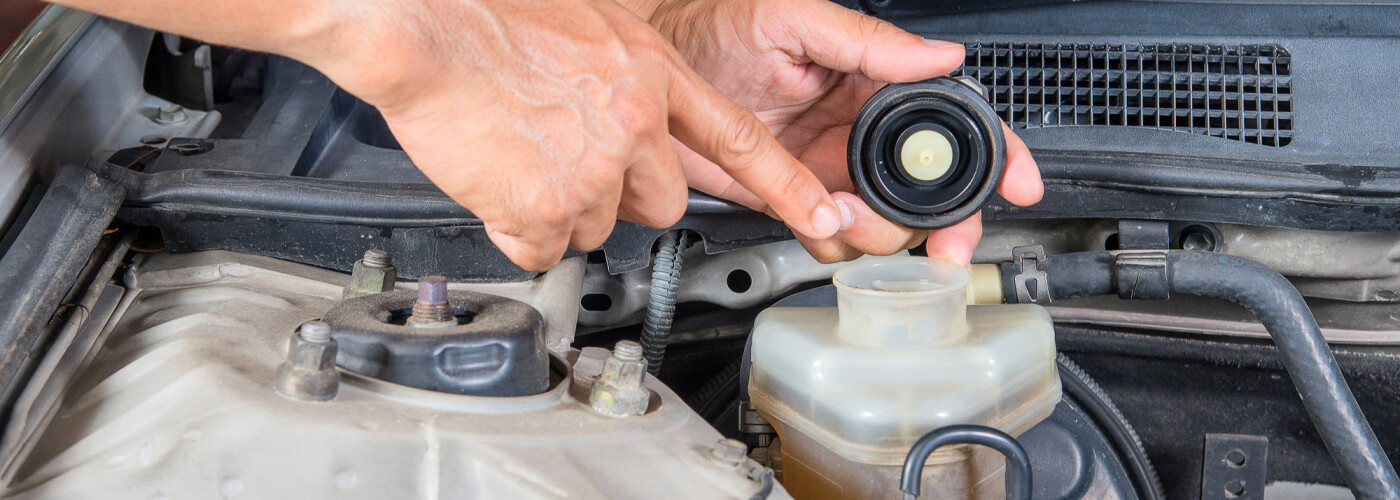
In a broad sense, brake servicing, like the kind performed by our service center near Oklahoma City, encompasses a variety of smaller, individual repairs. These are geared toward keeping your brakes working at optimal levels of efficiency and safety. One such item of brake servicing is known as brake bleeding, or ‘bleeding the brakes.’ In short, this process is done to remove trapped air pockets in your vehicle’s brake fluid, ensuring that there aren’t any ‘soft spots’ in your brake pedal application during your Edmond drives.
Brake bleeding itself isn’t terribly complicated, but it can be a little time-consuming, especially if it’s one of your first times doing it. That being said, we always recommend having any type of automotive service performed by a certified technician, but if you’d prefer to bleed the brakes on your vehicle yourself, we’d love to help you with the following information and guided steps on how to bleed brake lines! Please reach out to us if you have any questions!
If you’re ready to have a go at bleeding brake lines on your vehicle without having a shop take care of it for you, then there’s a couple supplies you’ll need to source first:
On level and solid ground, carefully jack up your car and remove all of the wheels once you have secured the vehicle on jack-stands or a lift.
Now, find the four caliper bleeding screws and proceed to loosen them. If the screw strips or snaps you’ll likely need to contact a service center, so be careful with the amount of force you apply.
After all four of the screws are loosened, return and tighten them again.
Open your vehicle’s hood and check the brake master cylinder reservoir’s fluid level. Gently top off if needed. While you’re bleeding the brakes, leave the master cylinder cap unscrewed but still resting on top of the reservoir.
To start, you’ll want to bleed the brake furthest from the master cylinder, but your vehicle may require a different order. You can check your owner’s manual or ask a technician for guidance.
Take the end of a piece of the tubing and secure it over the first bleeder screw. Place the other end of the tube in the cut-in-half bottle. (You can also purchase a brake bleeding kit from an auto parts store!) The tubing needs to be long enough that you can place the container above the bleeder screw’s height. This way, any air caught in the tube won’t move back into the brake caliper, as this would negate the effect of bleeding air from the brakes. You’ll need an assistant for the next step!
Make sure the car engine is off, and ask your assistant to pump the brake pedal several times until they feel resistance pushing back against the pedal. Instruct them to keep pressure on the pedal. Meanwhile, open the bleeder screw a bit. Fluid will move through the tube and the pedal will start dropping closer to the floor. Make sure your assistant continues to apply pressure until you instruct them to release the brake pedal!
Have your helper notify you immediately when the pedal reaches the floor. When they do, close the bleeder screw right away. Then, inspect the fluid level in the master fluid reservoir. You may need to add fresh fluid.
Repeat the previous two steps about five times at the same bleeder screw, or until the fluid stream no longer has any bubbles. Then, repeat steps 7, 8, and 9 on the other three bleeder screws in the correct order — starting with the screw further away from the master cylinder and moving to the one closest to it.
After you’ve finished bleeding your brakes, instruct your helper to apply the brakes, then quickly release the pedal. While they do that, watch the fluid in the master cylinder reservoir. If the fluid is bubbling significantly, there’s still air in the system and you’re not quite done. However, if the fluid is moving only slightly, and without bubbles, you’ve bled the brakes fully.
Before putting the wheels back on your car, tighten each of the bleeder screws. Again, don’t use all of your strength — just apply enough pressure to make sure they’re secure.
If your vehicle is showing signs of poor braking, it may be time for brake service beyond brake bleeding, which will likely require the help of the ASE certified professionals at our Toyota service center near Shawnee. Schedule an appointment through this page!
The 2021 Highlander far exceeds expectations for the model year, an observation echoed throughout the 2021 Toyota Highlander reviews. Well-equipped with a stylish cabin and all-new Toyota safety system, the Highlander is ideal for outdoor enthusiasts and Oklahoma City families alike.
First released in the U.S. market in 2000 as the world’s first mass-produced hybrid car, the Toyota Prius has since come a long way. Now in its fifth generation of production, the 2025 Toyota Prius comes in four distinct trims that can each be configured with FWD or AWD. In our overview of the Toyota…
The Toyota Highlander is an impressive model, and the 2022 model year is no different. Equipped with a brand new Toyota safety system and an impressive interior, this SUV is ideal for Midwest City families and outdoor enthusiasts alike. Learn more about what the experts have to say about the 2022 Toyota Highlander with Post Oak Toyota below….